Transporting abrasive, high-density materials is one of the toughest challenges in fluid handling systems. Operations involving high-solids slurry transport and thick, viscous materials often experience repeated hose failures. Standard hoses wear out quickly due to abrasion, pressure loss, or structural collapse. This is where custom hoses become necessary: they are designed specifically for demanding slurry conditions, rather than forcing operations to rely on general-purpose hose designs.
Custom slurry hoses are designed around real operating conditions such as solids concentration, particle size, flow rate, and pressure changes. By tailoring hose construction, liner materials, reinforcement layers, and dimensions, high-viscosity hose solutions provide longer service life, stable flow, and reduced downtime. For industries like dredging, mining, wastewater treatment, and construction, choosing purpose-built hose systems is not just about durability. It is about maintaining consistent, reliable material transport under extreme working conditions.
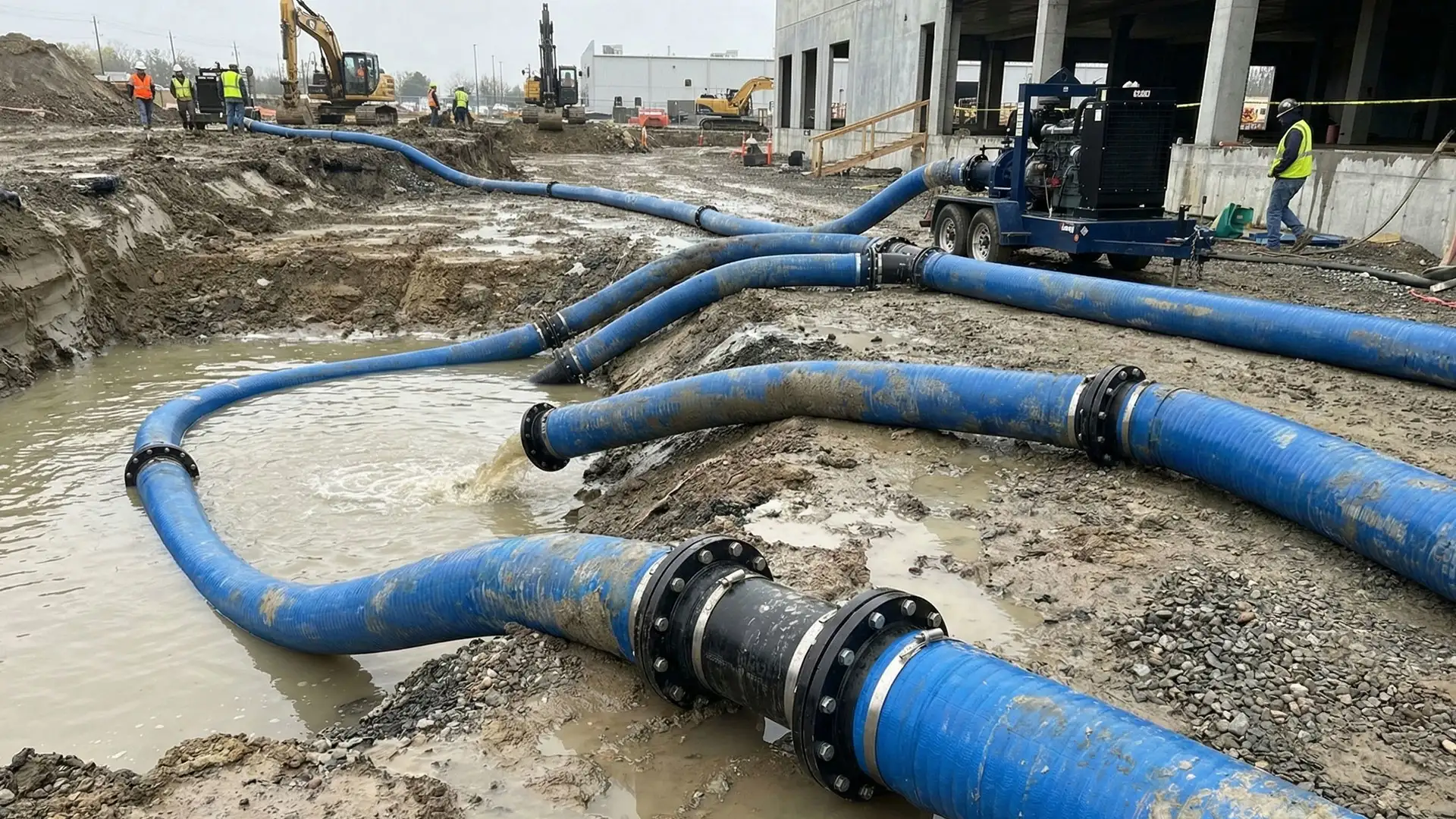
Understanding the Nature of High Solids and High Viscosity Slurries
High-solids, viscous slurries behave very differently from clean liquids. They place much higher mechanical and flow-related stress on hoses and transfer systems. These materials often contain abrasive particles, uneven moisture content, and inconsistent flow behavior. As a result, custom hoses are designed to match specific material properties rather than relying on standard hose construction.
What Defines High Solids Slurry Transport
High-solids slurry transport refers to moving fluids that contain a high concentration of solid material suspended in liquid. These slurries are heavier, more abrasive, and more difficult to keep moving than water or low-solids fluids. Common characteristics include:
- Elevated solids concentration by weight or volume
- Presence of coarse, sharp, or angular particles
- Higher abrasion risk for hose liners and reinforcement
- Increased energy required to maintain steady flow
Applications such as tailings pipelines, dredging discharge lines, and mineral processing systems depend on high-solids slurry transport to move material efficiently without blockages or frequent shutdowns.
How Slurry Properties Affect Hose Performance
The physical properties of a slurry directly affect a hose’s performance and service life. Important factors include:
- Viscosity, which determines flow resistance and internal pressure buildup
- Particle size, which affects abrasion rates and liner erosion
- Solids concentration, which increases hose weight and structural stress
As viscosity increases, hoses experience more internal friction and slower flow. Larger or sharper particles increase wear on the hose liner. This is why high-viscosity hose solutions with specialized liner materials are required for long-term, reliable operation.
Common Materials Moved Through Slurry Hose Systems
Many industrial processes involve moving dense, abrasive materials that standard hoses cannot handle. These include:
- Mine tailings with sand, gravel, and fine particles
- Dredged sediment with high silt and clay content
- Mineral slurries used in ore processing
- Fly ash from power plants and industrial combustion
- Wastewater sludge and biosolids
Each material behaves differently during transport. This is why custom hoses are engineered with application-specific size, reinforcement, and wear resistance to support demanding high-solids slurry transport conditions.
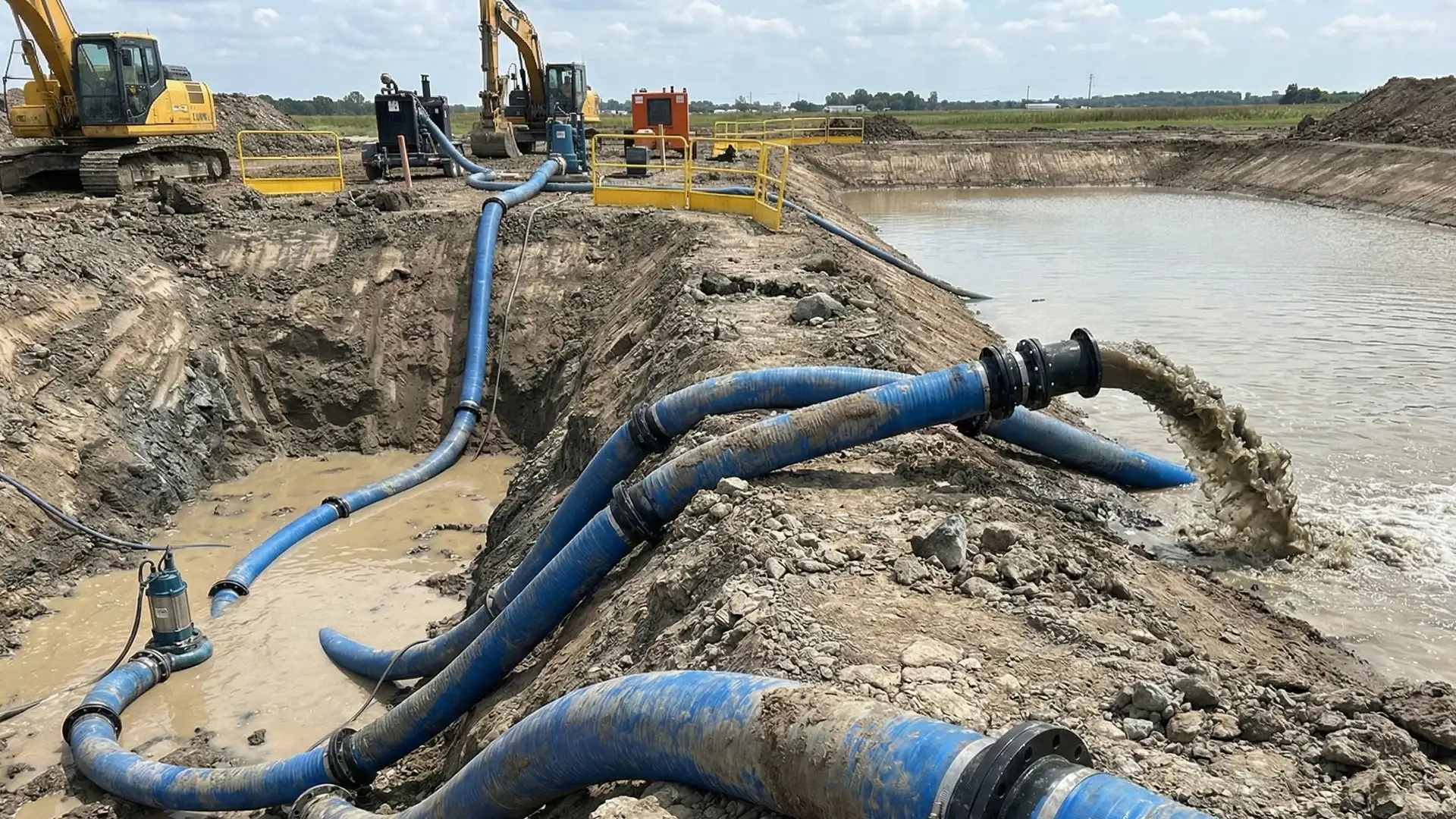
Where Conventional Hose Designs Break Down
In demanding industrial applications, conventional hoses are often used beyond their design limits. Most standard hoses are made for water, light chemicals, or low-solids flow. They are not designed for continuous high-solids slurry transport. When exposed to dense, abrasive, or highly viscous materials, failures happen quickly and repeatedly. This leads to unplanned downtime, higher maintenance costs, and safety risks.
Accelerated Internal Wear and Abrasion
Standard hose liners are not designed to withstand continuous contact with hard or sharp particles. In slurry applications, this results in:
- Rapid liner erosion from sand, gravel, and mineral fines
- Thinning of the hose walls that compromises pressure integrity
- Increased risk of leaks or rupture during continuous operation
Without abrasion-resistant compounds, hose life is significantly reduced in systems handling tailings, dredged sediment, or mineral slurries.
Structural Failure Under Pressure and Vacuum
High viscosity hose solutions must manage both internal pressure and external forces. Conventional hoses often struggle with:
- Collapse under suction or vacuum conditions
- Kinking during movement or alignment changes
- Delamination between the liner and reinforcement layers
These failures are common when pumping thick sludge, fly ash slurry, or concentrated wastewater solids, where flow resistance is high.
Inefficiency and Flow Instability
Generic hose designs also reduce system efficiency. Poor flow control leads to:
- Increased pump load and energy consumption
- Material settling inside the hose during low-velocity operation
- Inconsistent discharge rates that affect downstream processes
Because standard hoses are not designed for slurry behavior, they often become the weakest part of the system. This is why slurry hoses are required to maintain reliability, efficiency, and safety in demanding high-solids slurry transport applications.
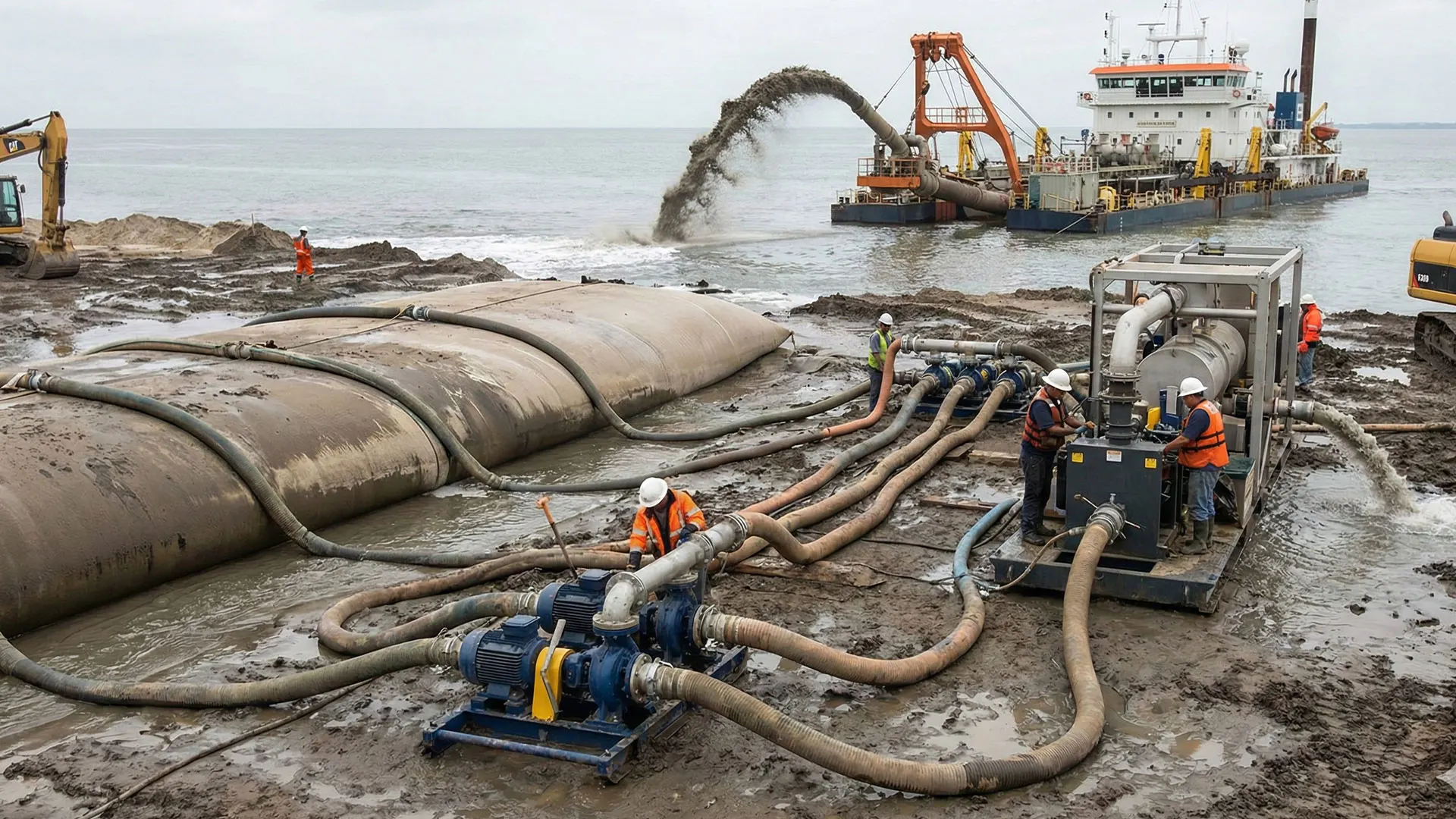
What Makes Custom Slurry Hoses Different by Design
Custom-engineered hose systems are built to match actual slurry operating conditions, rather than forcing applications to work with standard hose products. In systems handling high-solids slurry transport and thick, viscous materials, design accuracy directly affects performance, reliability, and hose life. Custom slurry hoses are developed by reviewing real operating data and engineering each hose layer to handle those conditions.
Application Driven Hose Geometry and Sizing
Unlike standard hoses, custom hoses are sized specifically for the application. Key design factors include:
- Internal diameter chosen to support proper flow and reduce settling
- Wall thickness adjusted for abrasion resistance and pressure rating
- Bend radius matched to site layout and movement needs
Correct sizing helps maintain stable flow and reduces turbulence that increases internal wear.
Reinforcement Engineered for Real Operating Loads
Slurry systems experience pressure changes, pulsation, and vacuum conditions. Custom hoses address these demands using reinforcement designed for:
- Continuous high-pressure discharge
- Resistance to collapse during suction or priming
- Mechanical stress from movement or alignment changes
This prevents common issues such as kinking, collapse, and fatigue-related failures
Liner Compounds Designed for Material Compatibility
The liner is the main wear surface in slurry transport. Custom hose designs use liner materials selected based on:
- Resistance to abrasion from sand, gravel, and mineral fines
- Compatibility with chemicals in the process fluid
- Ability to perform under operating temperature conditions
These liner choices are critical to reliable high-viscosity hose solutions in harsh environments.
Custom Lengths and End Connections
Standard hoses often require field cutting or additional joints, which increases the risk of failure. Custom hoses are supplied with:
- Hose lengths optimized to reduce unnecessary connections
- End fittings matched to pumps, pipelines, or floating systems
- Connection designs that simplify installation and maintenance
By engineering every part of the hose assembly, custom solutions provide consistent performance in demanding slurry transport operations.
Engineering for High Solids Slurry Transport Efficiency
Efficient high-solids slurry transport depends on keeping material moving while limiting wear on system components. Slurries with high solids content tend to settle when flow slows down, but very high flow speeds increase abrasion and reduce hose life. Custom slurry hoses are engineered to balance these factors by matching hose size, liner properties, and reinforcement to actual operating conditions.
Balancing Flow Velocity and Wear
Maintaining the right flow speed helps prevent settling without causing unnecessary damage. Key design considerations include:
- Selecting internal diameters that support a steady transport velocity
- Controlling flow rates to limit particle impact on hose walls
- Using abrasion-resistant liners to manage continuous wear
These choices allow systems to operate efficiently while extending hose life in high-solids slurry transport applications.
Smooth Bore Versus Corrugated Bore Hose Designs
The internal bore design affects flow behavior and wear.
Smooth-bore hoses support even flow and lower pressure loss, making them suitable for continuous slurry discharge.
Corrugated-bore hoses provide greater flexibility but increase turbulence and localized wear.
Custom slurry hoses are commonly built with smooth-bore interiors for high-solids flow, while corrugated designs are used where flexibility is required.
Matching Hose Construction with Pump Type
Different pumps place different stresses on hose systems. Dredge pumps deliver high flow with abrasive materials, while positive-displacement pumps create pulsation and pressure spikes. Custom slurry hoses account for this by:
- Reinforcing for sustained high flow discharge from centrifugal dredge pumps
- Designing layers to absorb pulsation from piston or diaphragm pumps
- Aligning pressure ratings with pump curve characteristics
This reduces fatigue-related failures and stabilizes system operation.
Stabilizing System Pressure and Flow
Pressure changes and uneven flow increase the risk of settling and hose damage. By engineering reinforcement and liner stiffness for the application, custom slurry hoses help control pressure fluctuations and maintain steady material movement, improving overall system reliability.
High Viscosity Hose Solutions for Thick and Non-Newtonian Fluids
High-viscosity materials pose challenges beyond abrasion and solids loading. Non-Newtonian slurries, such as thick sludge, bentonite, and drilling mud, exhibit viscosity changes under varying flow conditions. This makes material behavior unpredictable. High-viscosity hose solutions must be designed to handle these changes without losing strength or shape.
Challenges of Transporting Thick and Shear-Sensitive Materials
Dense, paste-like slurries resist flow and place high stress on hose walls. Common issues include:
- Increased internal friction that raises system pressure
- Risk of hose collapse during suction
- Irregular flow caused by shear thinning or thickening
These conditions require hoses that maintain structural stability under heavy operating loads.
Hose Wall Stiffness Versus Flexibility Trade-Offs
Hoses for viscous materials must balance strength and flexibility. Excessive stiffness makes installation difficult, while excessive flexibility leads to deformation. Custom slurry hoses address this by:
- Using strong reinforcement with flexible outer layers
- Designing wall thickness to resist deformation
- Maintaining a stable internal diameter during operation
This balance is critical for reliable high-viscosity hose solutions.
Reinforcement Geometry and Collapse Resistance
Reinforcement design plays a major role in hose durability. Multi-layer or spiral reinforcement structures are used to:
- Maintain roundness under vacuum conditions
- Distribute stress evenly along the hose length
- Support long-term operation with thick, slow-moving materials
Industry Examples Driving High Viscosity Hose Design
Industries handling dense and variable materials rely on custom hose systems, including:
- Wastewater facilities transporting thick sludge and biosolids
- Construction and tunneling projects, pumping bentonite slurry
- Oil and gas operations are moving drilling mud with fluctuating viscosity
In each of these environments, high-viscosity hose solutions that account for real material behavior are essential to maintaining stable flow and operational continuity.
Real World Applications Driving Custom Hose Requirements
Many industrial operations push slurry systems beyond the limits of standard hoses. Changes in material composition, long operating hours, and harsh environments make custom slurry hoses necessary rather than optional.
Dredging operations transport sediment with high sand and silt content, causing significant internal abrasion. These materials are often pumped continuously over long distances, requiring hoses that maintain internal shape and liner strength over time. Mining operations handle mineral concentrates and tailings that contain sharp particles, high solids concentration, and changing flow conditions. These factors quickly damage standard hoses.
Wastewater treatment facilities face different challenges when moving thick sludge and biosolids. These materials combine high viscosity with chemical and biological exposure, increasing internal resistance and structural stress. Construction and tunneling projects discharge bentonite and grout slurries with uneven flow behavior and high viscosity. In all of these environments, custom slurry hoses are engineered to meet specific material requirements for high-solids slurry transport and high-viscosity applications.
Hose Integration with Pumps and Floating Systems
Reliable slurry transport depends on proper integration between hoses, pumps, and support systems. When components are not matched correctly, systems experience pressure problems, increased wear, and early hose failure. Custom slurry hoses are designed with pump and system requirements in mind to support stable flow and long-term performance.
Slurry pump discharge pressure, flow rate, and pulsation directly affect hose design. Centrifugal dredge pumps require liners that resist abrasion and allow high flow, while positive-displacement pumps require reinforcement to handle pressure spikes. Hose stiffness and geometry are adjusted to match these operating conditions.
Floating slurry hose systems incur additional stresses from movement, waves, and changing alignment. Custom slurry hoses used in these applications are engineered to manage bending stress, fatigue, and buoyancy. End connections are also designed to match pump flanges, pipelines, or floating hardware. Properly engineered connections improve sealing, reduce installation time, and make maintenance easier in harsh operating environments.
Maintenance, Inspection, and Lifecycle Considerations
One of the main benefits of custom slurry hoses is improved long-term performance. When the hose design matches the material type and operating conditions, service life increases, and the risk of unexpected shutdowns decreases.
Custom hose designs often include planned liner thickness and visible wear indicators. These features enable operators to track abrasion before failure. This makes maintenance more predictable and reduces emergency replacements, especially in continuous-duty high-solids slurry transport systems.
Inspection schedules become easier to manage when wear behavior is consistent. Operations handling coarse tailings, dredged material, or thick sludge can plan hose replacement based on known wear patterns. Compared to frequent replacement of standard hoses, custom slurry hoses reduce downtime, labor costs, and the risk of damage to other system components. Over time, this results in a lower total cost of ownership and more reliable operation.
Selecting the Right Custom Slurry Hose Partner
Reliable slurry transport starts with proper analysis and engineering support. Choosing the right partner ensures custom slurry hoses are designed using real operating data, not assumptions.
Effective hose design depends on accurate application details. These include solids concentration, particle size, pressure range, temperature, flow rate, and installation layout. A qualified supplier uses this information to select the right liner materials, reinforcement structure, and hose dimensions for high-solids slurry transport and high-viscosity hose solutions.
Customization reduces risk in critical slurry systems by avoiding under-designed or over-engineered hoses. When hose construction matches actual operating conditions, systems experience fewer failures, longer service life, and more consistent performance. Working with an experienced hose partner gives operators confidence that their slurry transport system can perform reliably under demanding conditions.
Conclusion: Engineering Confidence into Demanding Slurry Transport Systems
Custom slurry hoses play an essential role in managing the challenges of high-solids slurry transport and handling thick, viscous materials in demanding industrial environments. By designing hose geometry, liner compounds, reinforcement, and connections around real operating conditions, these systems deliver longer service life, stable flow, and reduced downtime compared to standard hose assemblies.
For operations in dredging, mining, wastewater treatment, and construction, working with an experienced supplier makes a clear difference in system reliability and performance. To explore application-specific solutions and get expert support for your slurry transport system, connect with us at https://daehose.com and ensure your hose design is built for durability, efficiency, and long-term operation.