In heavy-duty fluid systems, hoses are often the weakest link, even though they carry the full load of pressure, movement, and environmental stress. When a hose fails on a construction site, the impact goes far beyond a simple repair. Equipment sits idle, crews lose hours, hydraulic oil or slurry spills into sensitive areas, and safety risks escalate in seconds. A single rupture can halt an entire operation and trigger costly cleanup or compliance issues.
This is why DAE hoses are engineered for harsh job-site realities rather than adapted from generic industrial designs. Built for real construction equipment applications, they are made to withstand abrasion, pressure spikes, constant flexing, and exposure to heat, UV, and chemicals. Understanding what drives true hose durability reveals why purpose-built hoses outperform standard alternatives in the field.
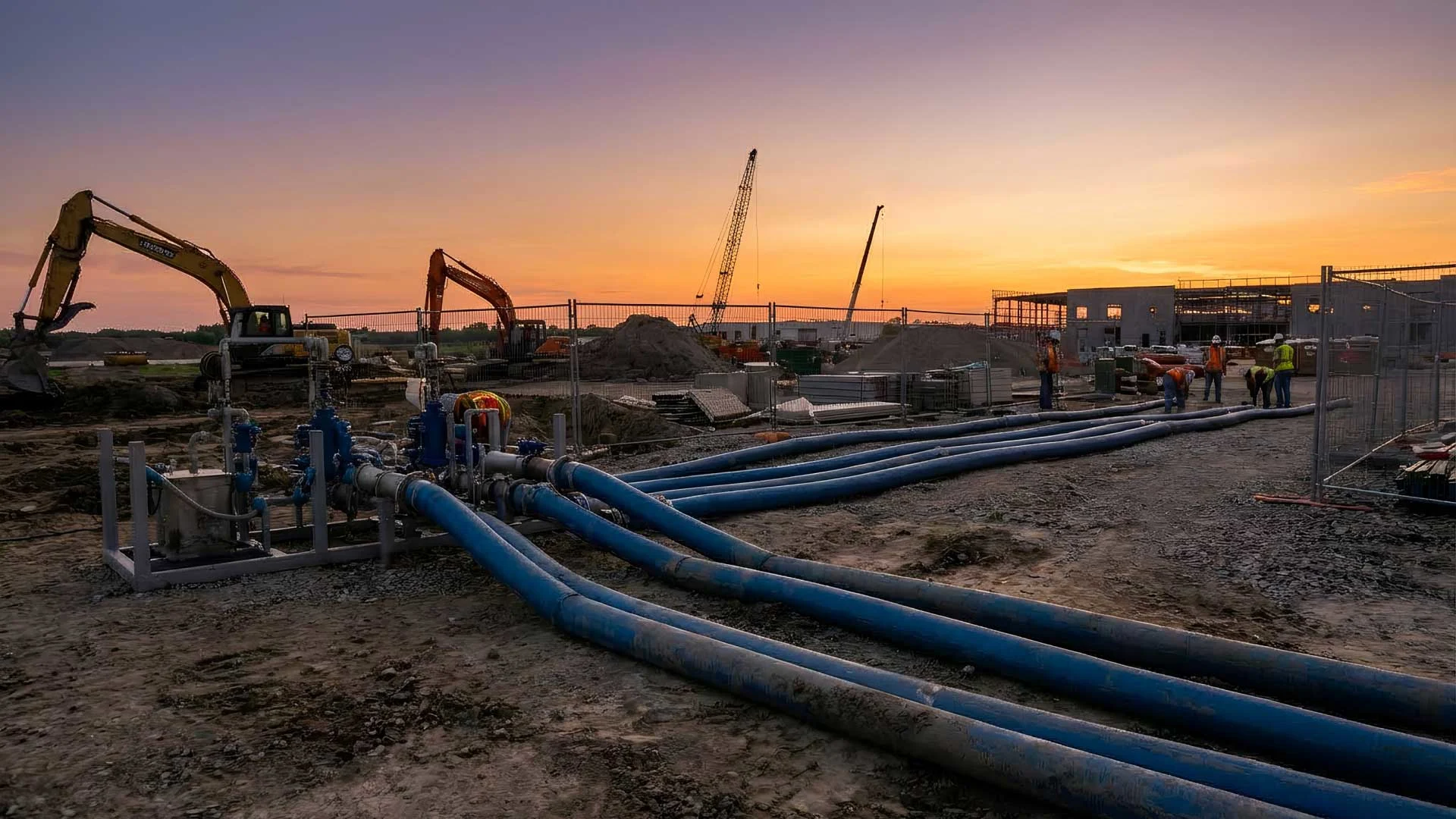
What “Durable” Really Means in Construction Environments
In construction environments, durability is not a marketing claim. It is the measurable ability of a hose to survive continuous abuse without degrading, rupturing, or losing performance. True hose durability means resisting four dominant stress categories found on job sites: abrasion from debris, rock, and steel surfaces; pressure cycling and hydraulic shock from sudden load changes; UV, heat, and chemical exposure in open-air and industrial settings; and constant movement, bending, and vibration from mobile equipment. Each of these forces attacks a hose differently, and failure often occurs where they overlap.
Construction hoses fail earlier than factory hoses because job sites are uncontrolled environments. Unlike fixed industrial systems, construction equipment applications involve motion, impact, weather, and irregular loads. This is why standards matter. DAE hoses are built to meet these realities, not ideal conditions, ensuring hose durability where ordinary designs fall short.
Inside the Anatomy of DAE Hoses
Modern hoses are engineered systems, not simple rubber tubes. Every DAE hose is built as a layered structure, with each component performing a specific role under stress. This construction allows the hose to handle pressure, movement, and environmental exposure simultaneously. In construction equipment applications, failure rarely comes from a single cause. It happens when materials, reinforcement, and protection are not designed to work together. DAE hoses are built as integrated systems, with each layer reinforcing the next.
Inner Tube
The inner tube is formulated for direct contact with hydraulic oil, slurry, water, and chemical mixtures. Material selection focuses on chemical resistance, low permeability, and thermal stability. This prevents swelling, cracking, and internal erosion that reduce flow efficiency and accelerate failure.
Reinforcement Layers
Reinforcement provides structural strength. Textile braid offers flexibility and fatigue resistance for constant movement. Steel wire reinforcement delivers high-pressure capacity and shock resistance for demanding hydraulic circuits. DAE hoses use reinforcement matched to real load profiles.
Outer Cover
The outer cover protects against abrasion, UV exposure, and tearing. It shields the hose from rock, steel edges, sunlight, and job-site impact.
Each layer contributes directly to hose durability in construction equipment applications:
- Inner tube preserves fluid integrity and flow stability
- Reinforcement absorbs pressure and shock loads
- Outer cover resists abrasion, weather, and mechanical damage
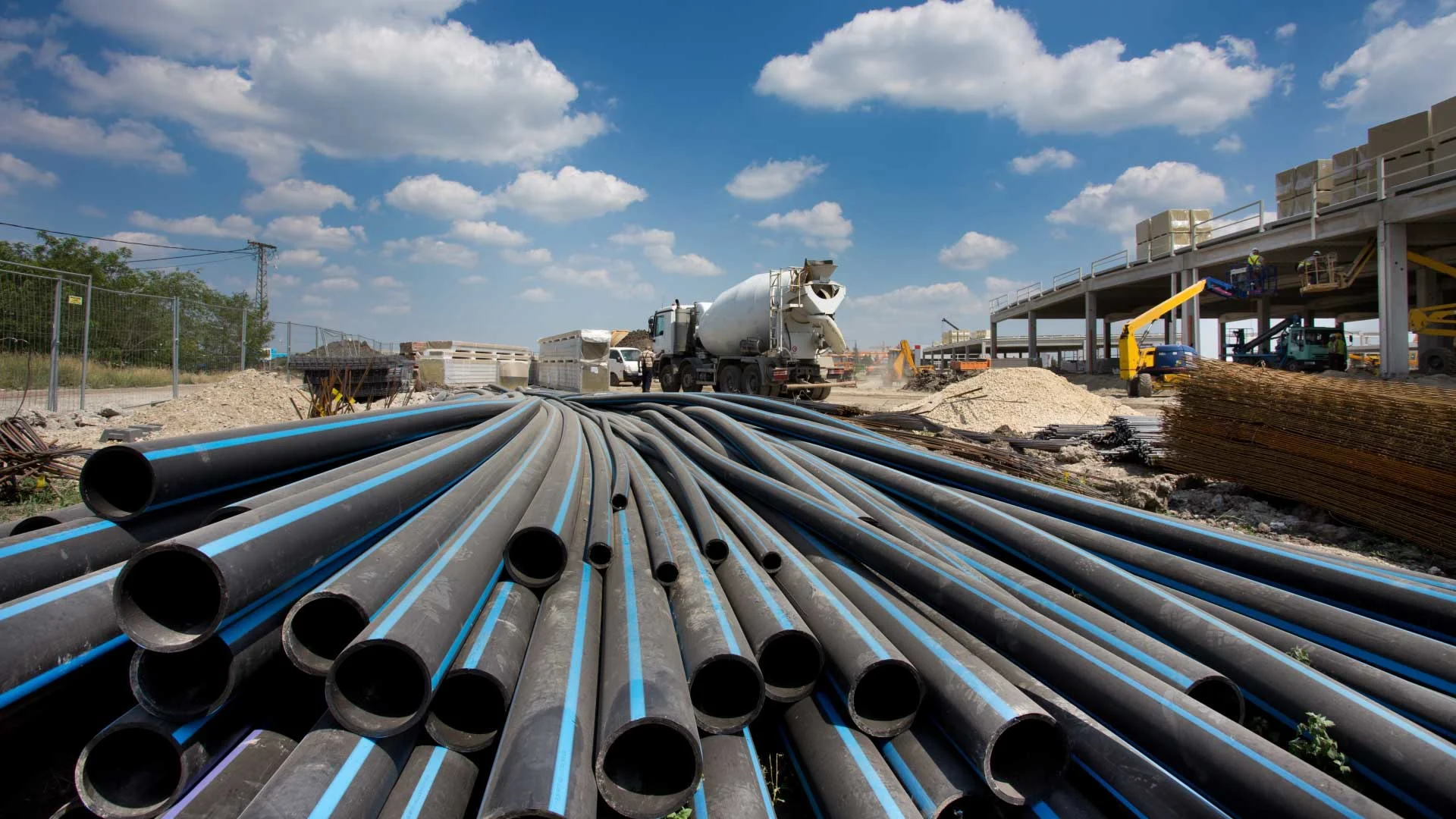
Material Science That Drives Long-Term Performance
Hose durability begins at the molecular level. Generic hoses often rely on basic rubber compounds that harden, crack, or swell under real job-site conditions. DAE hoses use advanced rubber formulations and synthetic polymers engineered to perform under sustained stress. These materials are selected not just for strength, but for how they behave over time. The goal is to balance flexibility with tensile strength so the hose can bend repeatedly without fatigue while still resisting pressure and deformation.
These compounds are designed to withstand constant exposure to hydraulic oils without softening or leaching. They resist abrasion and internal erosion from slurry mixtures carrying sand, silt, or fines. They maintain integrity across temperature extremes, from cold starts to high operating heat. They also protect against ozone and sunlight, which rapidly degrade standard rubber in outdoor construction environments.
This material science translates directly into service life. In construction equipment applications, where hoses flex, heat, and cycle every day, the right compound can mean months or years of additional performance before replacement becomes necessary.
Pressure Ratings, Safety Factors, and Burst Resistance
Every hose carries two pressure values: working pressure and burst pressure. Working pressure is what the hose is designed to withstand continuously during normal operation. Burst pressure is the point at which the hose physically fails. In construction equipment applications, systems rarely operate at steady loads. Pumps start under load, valves close suddenly, and heavy implements shift direction. These events create pressure spikes that can exceed nominal ratings in milliseconds.
Because of this, hose durability in the field depends on higher safety margins than those used in controlled industrial settings. Construction equipment demands hoses that can absorb shock without fatigue.
Key performance factors include:
- Continuous operating pressure under full load
- Surge tolerance during rapid pressure spikes
- Fatigue resistance across thousands of pressure cycles
DAE hoses are specified for real-world loads, not ideal lab conditions. Their pressure ratings account for the unpredictable nature of construction work, ensuring reliability where ordinary hoses fail under shock and repetition.
How Construction Equipment Destroys Ordinary Hoses
On a job site, hoses live in motion. Excavator arms flex through wide ranges, pulling hoses across steel edges and pivot points. Dredge lines drag over rock, sand, and submerged debris for hours at a time. Pumps run at full load, transmitting constant vibration through every connected line. Unlike factory systems, nothing is fixed or protected. Hoses twist, bend, rub, heat up, cool down, and repeat this cycle all day.
Routing changes with every movement. Environmental exposure adds UV, moisture, grit, and temperature swings. These forces compound, accelerating wear at contact points, bends, and fittings. Ordinary industrial hoses are not built for this reality. DAE hoses are designed specifically for construction equipment applications, engineered from the start to withstand motion, abrasion, and shock rather than adapted after failure.
Manufacturing Standards That Separate Industrial From Job-Site Grade
Hose durability is not defined solely by design. It is proven in manufacturing. Job-site grade hoses require controlled production, tight tolerances, and consistent quality assurance at every stage. In DAE hoses, each layer is built under strict process control so materials behave as a single system under load. Layer bonding precision ensures the inner tube, reinforcement, and outer cover act together rather than separating under stress. Reinforcement alignment keeps pressure loads in check, preventing localized strain. Cure processes lock in flexibility and strength, ensuring the hose retains its properties over time rather than becoming brittle or soft.
When manufacturing discipline is lacking, failure begins internally. Poorly built hoses commonly suffer from:
- Delamination between layers
- Weak pressure zones along the length
- Premature cracking under heat and flex
In construction equipment applications, these defects surface quickly. Manufacturing standards directly determine whether a hose survives real job-site abuse or becomes a recurring point of failure.
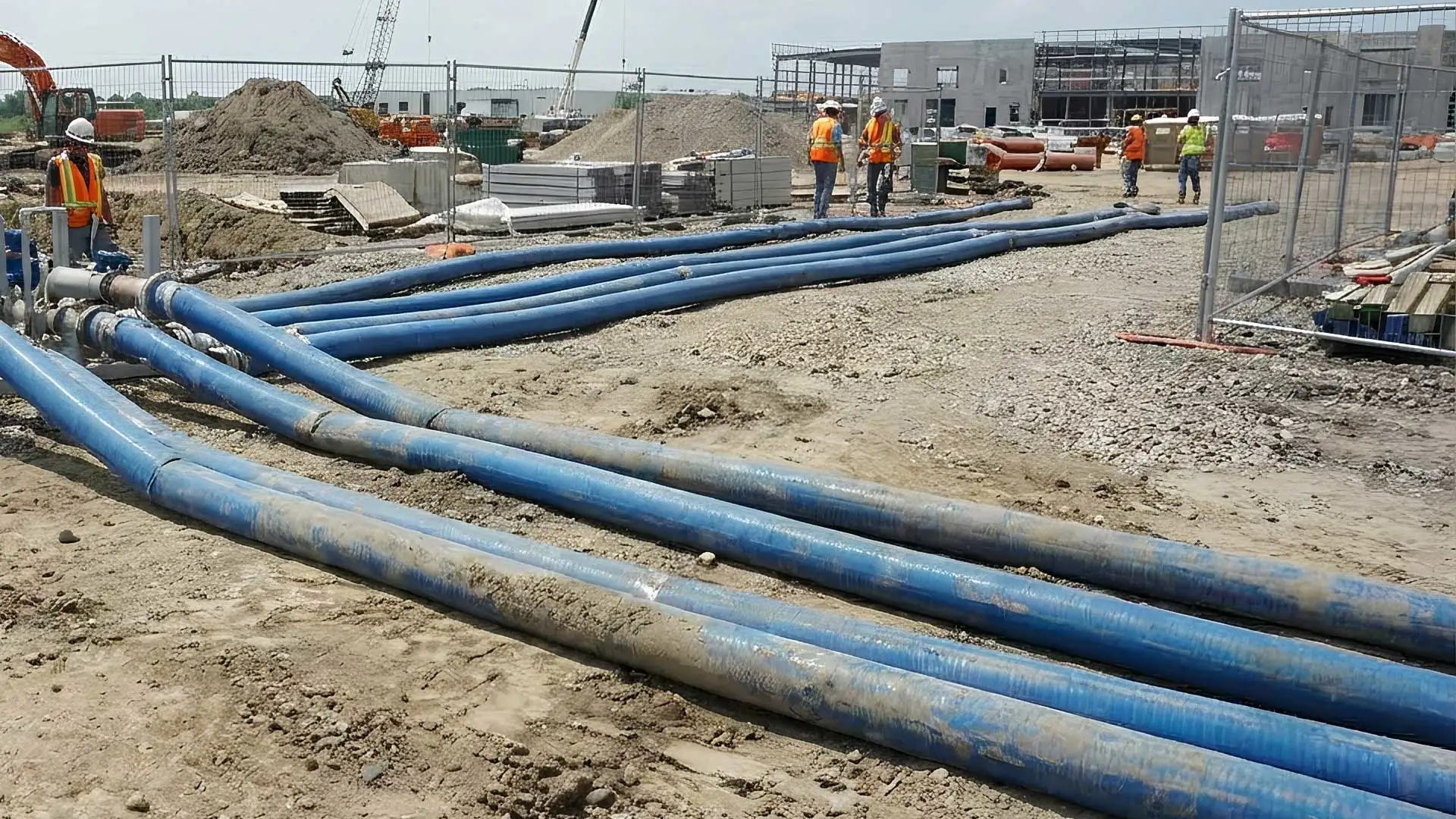
Matching Hose Design to Application Type
In construction environments, the idea that one hose can serve every application leads to early failure. Each system imposes a different form of stress, and its durability depends on how precisely the design matches that duty. DAE hoses are engineered by application, not by compromise, ensuring construction equipment applications receive the right balance of flexibility, strength, and protection.
Hydraulic Circuits on Excavators
These systems experience rapid pressure changes and constant arm movement. DAE hoses use reinforcement optimized for shock loads while maintaining bend flexibility to prevent fatigue at pivot points.
Slurry and Dredging Lines
Abrasive mixtures grind away ordinary hose interiors and outer covers. DAE hoses for slurry service use compounds and covers designed to resist internal erosion and external abrasion.
High-Flow Pump Discharge
Large-volume flow creates vibration and heat buildup. DAE hoses manage thermal stress and structural load without collapsing or hardening.
Mobile Equipment With Constant Flex
Repeated bending destroys rigid designs. DAE hoses are built to endure continuous motion without cracking or kinking.
Installation and Routing: The Hidden Factor in Hose Life
Even the most advanced hose design depends on proper installation. Bend radius, clamping, and movement allowance determine how stress is distributed during operation. In construction equipment applications, hoses must move with the machine rather than fight against it. Tight bends, rigid mounting, or forced alignment concentrate strain at fittings and curves, accelerating fatigue and internal damage.
Key installation practices that extend hose durability include:
- Avoiding twist under load during routing and connection
- Protecting high-wear contact points with guards or sleeves
- Maintaining the correct bend radius through the full range of motion
DAE hoses are engineered for harsh conditions, but no hose is immune to poor routing. When installed like rigid pipe, even high-durability hoses will fail early under constant flex and vibration.
What Buyers Should Look For in High-Durability Hoses
When evaluating high-durability hoses for demanding environments, buyers should look beyond basic specifications and focus on how well the hose aligns with actual operating conditions. A reliable selection framework includes:
- Pressure rating aligned to actual system loads, not just nominal values
- Reinforcement type matched to the duty cycle and movement pattern
- Outer cover rated for abrasion, impact, and UV exposure
- Compatibility with the fluids handled and the operating temperature range
- Proven performance in construction equipment applications
Price alone rarely reflects long-term value. Buyers who assess construction standards, material quality, and application fit reduce downtime, improve safety, and lower replacement costs over the life of the equipment. Hose durability is an investment in operational continuity, not a commodity purchase.
Conclusion: Durability Is Designed, Not Promised
Hose durability is never the result of branding alone. It is built through deliberate engineering choices that determine how a hose behaves under pressure, motion, heat, and abrasion. DAE hoses combine advanced material science, layered construction, disciplined pressure design, and controlled manufacturing standards to withstand real job-site abuse. Each component plays a defined role in resisting fatigue, erosion, shock loads, and environmental exposure. This integrated approach is what allows DAE hoses to perform where ordinary industrial hoses fail, especially in demanding construction equipment applications.
Construction operations that treat hoses as engineered components rather than consumables experience fewer breakdowns, safer work environments, and lower lifetime costs. Selecting hoses based on construction standards and real operating demands shifts maintenance from reactive to predictable. For teams looking to reduce downtime and improve system reliability, DAE Hose offers purpose-built solutions designed for the realities of the field, not the assumptions of the lab.